How Did the Pittsburgh Zoos Baby Elephant Die
Pittsburgh Zoo should not expand breeding program
MCT
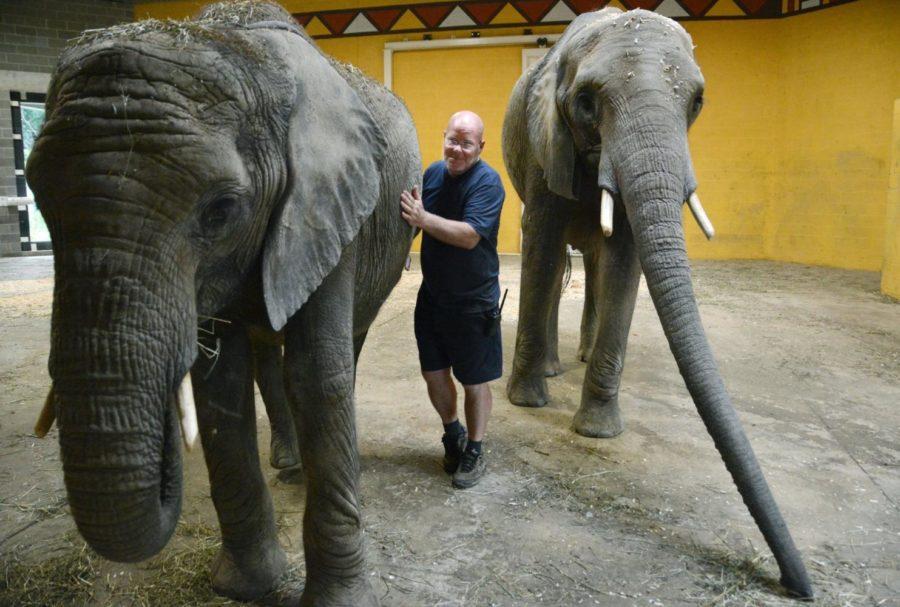
Willie Theison, elephant plan manager at the Pittsburgh Zoo, stands between Zuri and her sister Victoria. (Nate Guidry/Pittsburgh Mail-Gazette/MCT)
Last summer, the Pittsburgh Zoo euthanized its only elephant calf — Little Fleck, a premature three-month-old rejected by her mother who had stopped eating due to painful teething. PETA criticized the zoo for the way it handled Picayune Bit'due south wellness and expiry — and this wasn't the first time. The animal rights organization has criticized the zoo before, including in 2014 when the U.S. Department of Agronomics investigated it for using dogs to herd its elephants. The Pittsburgh Zoo has been criticized several times for its treatment of elephants and has earned the rank of the second-worst place for elephants in America. But despite this title, the zoo has decided to expand its elephant population further, applying to import elephant semen from Canada for breeding purposes. Barbara Bakery, president and CEO of the zoo, said this move will introduce new genetics into the zoo's elephant population to help ensure its growth in the future. Merely the zoo elephant population shouldn't grow, not in Pittsburgh and non anywhere else. Elephants born into captivity will be forced to lead a life full of physical and psychological health risks, being raised to attract and entertain people. Better options exist to assistance save elephants as well placing them in zoos that cannot meet their needs. Elephants face extreme risks to their health if kept in zoos. Obesity, injury, stress and disease are parts of daily life for many of these animals. According to a Seattle Times analysis of elephant fatalities in zoos across the United States, the majority of deaths resulted from injury or disease linked to captivity, which could explain why wild elephants live on average at least twenty years more than than their captive counterparts. Elephant calves born in captivity are thus born into lives of health problems and a likely premature death. A less-visible suffering as well exists for these animals behind a zoo's confined. Elephants often display " zoochosis "— repetitive beliefs ranging from head-bobbing to self-mutilation — that suggests low and distress from a lack of stimulation. This atypical behavior isn't seen in wild elephants, and is a production of zoos' inability to account for the size and complication of elephants' social constructs and ecosystems. The weight of scientific evidence regarding elephants' failure to thrive in captivity, forth with pressure from animal activists, has led at least 22 zoos to close or program to close their elephant exhibits. However the power of these creatures to bring in visitors continues to outweigh the costs in many zoos across America, where approximately 230 elephants nonetheless live in captivity. John Lewis , director of the Los Angeles Zoo, rejected the thought of a zoo-run sanctuary, fretting that visitor numbers would decrease because some would not "appreciate large enclosures with animals far abroad." But suburban families should not be the main priority of zoo owners and directors. If people charged with the safekeeping of endangered animals actually did care, and then they would start considering alternatives to exploiting them for the viewing pleasure of tourists and schoolchildren. Some argue animals need zoos because there is no other culling for protecting endangered creatures such as elephants. Robert Hoage , former public affairs director at the National Zoo, described zoos as, "not bully places for elephants, just they are meliorate [there] than dead." Of course, the dangers that elephants currently face in the wild are very existent. Poaching continues unabated, with estimates of 55 slain elephants every twenty-four hour period. The demand for ivory remains strong in countries like China, which is responsible for 70 percent of worldwide ivory demand. But in that location is an alternative to zoos — sanctuaries. Elephant sanctuaries are large facilities that care for elephants from zoos and circuses, and provide them with natural habitats that allow for protection, space and autonomy. They are funded by private donations and, unlike zoos, prioritize the elephants' well-being past meeting their physical and social needs, and employing minimal human contact. The Elephant Sanctuary in Tennessee , which has provided refuge to 27 elephants, i s certified past the Association of Zoos & Aquariums for demonstrating a commitment to exemplary animate being care and welfare. Some may fear that fewer elephants in zoos means that fewer people volition become invested in their well-being and not care about their plight in the wild. Merely the opposite is true. Zoos create the idea that the elephants there are safe from harm and happy to entertain people. A global survey from World Association of Zoos & Aquariums found that zoo visits really make people 17 percent less committed to have activity on habitat protection and creation. Zoos ultimately do little to convince ordinary folks that they should care about wild elephants' plight. And zoos themselves aren't proving they are a help to the endangered elephant population through convenance and raising the species in captivity — very few calves survive in the first place. The overall baby-bloodshed charge per unit for elephants in zoos is 40 per centum — nearly triple the rate of those in the wild — an indication that elephants' failure to thrive in this environment may begin as early as formulation. Captivity is a terrible existence for whatever intelligent, self-aware species similar elephants. By capturing and convenance these animals for public brandish, zoos are propagating a cycle of suffering that goes against their about basic proclaimed values. Zoos are non the paradises of conservation and pedagogy they claim to exist, and amend alternatives to them exist. If the Pittsburgh Zoo really wants to assistance elephants, it needs to do so in ways other than trying to breed more than elephants that could suffer in circumstances like to Little Chip'south.
How Did the Pittsburgh Zoos Baby Elephant Die
Source: https://pittnews.com/article/132692/opinions/pittsburgh-zoo-should-not-expand-breeding-program/
0 Response to "How Did the Pittsburgh Zoos Baby Elephant Die"
Post a Comment